visit tanzania logo

Ngorongoro Crater

Welcome to Ngorongoro Conservation Area

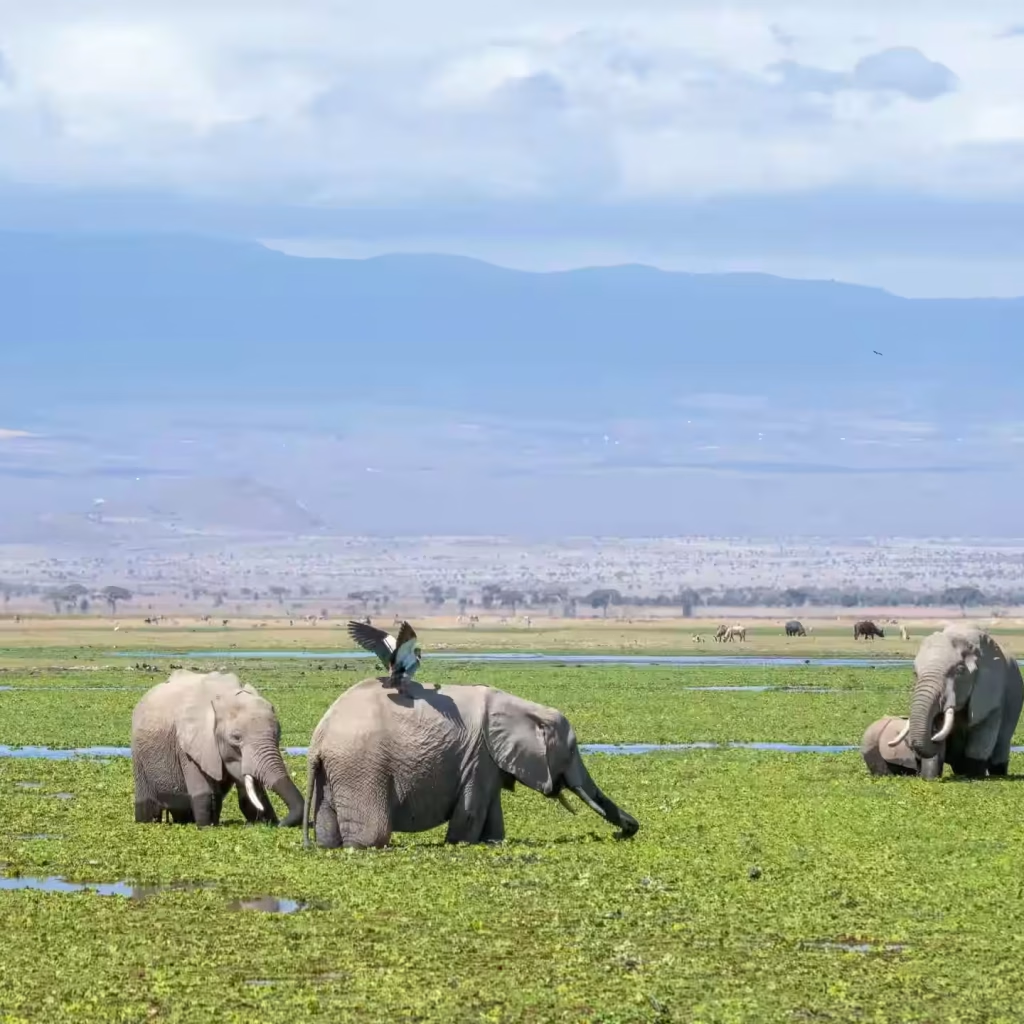
We welcome you to Ngorongoro Conservation Area, a UNESCO World Heritage Site and one of Africa’s natural wonders located in the Crater Highlands of Northern Tanzania. This region covers 8,292 square kilometers and is famous for the breathtaking Ngorongoro Crater, which is the largest intact volcanic caldera in the world. It is a wonder for wildlife, containing the big five and more than 25,000 large mammals. Along with the greater Serengeti ecosystem, the Ngorongoro region is famous for its breathtaking scenery which includes rich culture of the Maasai people, and significant archaeological places like Olduvai Gorge which is known for early human fossils. Ngorongoro provides a self-contained paradise with an abundance of nature and rich history. You can go off the bursting volcanic rims, descend to the crater for an intimate safari, and even go hiking to immerse in the history of ancient humans.

Map of Ngorongoro Crater

The Ngorongoro Conservation Area lies 180 kilometers west of Arusha City. It borders the Serengeti National Park to the northwest and Lake Manyara to the south. The coordinates are approximately 03°12′36″S 35°27′36″E. The region has varied topography like the famous Ngorongoro Crater which is 260 square kilometers and 610 m deep. It contains Lake Magadi which is a soda lake and has rich grasslands. To the south and southeast are volcanic highlands which include the active Ol Doinyo Lengai volcano and Empakaai Crater which has a lake filled with flamingos. The western plains that merge with the Serengeti are important for The Great Migration. Other geographical features include the southern Gregory Rift which has the highest escarpment. The Lodoare Gate is the Port of Entry for those coming from Arusha which is a 4-hour road trip. Other airstrips include Ngorongoro Airstrip which is located on the rim of the crater and Lake Manyara Airport which is 1.5 hours by car. To enhance your experience detailed maps showing roads, lodges and wildlife hotspots are available on the NCAA (Ngorongoro Conservation Area Authority) website and visitor centers. The maps make navigation in the rift valley landscape easier.


Meaning of the word Ngorongoro

The term “Ngorongoro” comes from the Maasai language and reflects the sound of cowbells worn by the cattle of the Maasai people (“ngoro ngoro”). The Maasai have lived in this area for hundreds of years. Other interpretations of the word claim that it comes from “El-Nkoronkorro” which refers to a “gift of life” indicating the rich grasslands of the crater which supports a lot of wildlife and people.

Best Time to Visit ngorongoro

Although Ngorongoro can be visited at any time of the year, the best wildlife viewing takes place during the dry months June to October, with cooler temperatures (daytime highs of 20-25°C/68-77°F, nights 4-7°C/39-45°F), less vegetation for easier animal spotting, and water sources like Lake Magadi providing abundant water.

This period also includes the Great Migration near the area and offers clear skies for descents into the crater. If you want to avoid the crowds and enjoy lush green scenery, bird watching (including migratory species), the wet season from November to May—January to March best— for calving, although roads may be muddy and some hikes difficult.

May and October are the shoulder months with a blend of both wildlife and less tourist activity and better pricing.Always check the weather, as it is subject to change.

Why You Should Visit Ngorongoro?

The Ngorongoro Conservation Area is a place that you should go to because it has natural attractions that you won’t find anywhere else in the world. Below are some of the reasons that make Ngorongoro a captivating tourist spot.

Exceptional Wildlife Density and Big Five Sightings

The Ngorongoro has around 25000 large mammals in the Ngorongoro crater which are possesed by 25000 large mammals. Ngorongoro safeguards the the black and white rhinos, the black and white leopards and black pans. This also adds for the thrill for the tourists that visit the crater for safaris without having to extensive traveling.

Amazing Views of the Crater Volcanic Caldera

The crater has 610 meter of walls, as well as having a self sustaining ecosystem which makes the place a tourists haven. The steep walls of the caldera graciously tower to a height of around 610 meters over the plains. Lookout points offer stunning panoramic views of the water and offer stunning views of the plains, which is a massive aid for the photographer.

Heritage and Archaeological Culture

The Maasai people which live in the Ngorongoro Conservation Area offer their unique traditions and their way of living in Wildlife through village tours. This goes hand in hand with the Olduvai Gorge which is a known for having remains of Homo habilis fossils and provides in the world tourism and adds a rich dimension for the world tourism.

Birdwatching Heaven

With more than 600 species of birds, including flamingos on alkaline lakes and migratory birds in the wet season, the region captivates both professional ornithologists and casual birdwatchers. The area’s rimmed forests and wetlands brimming with rare species add to the region’s diversity which makes it more interesting.

Connection to the Great Migration

Ngorongoro, as part of the Serengeti ecosystem, is a vantage point as millions of wildebeests and zebras migrate during calving season, adding to the intensive predator-prey action and, in turn, the feeling of embracing natural wonders perform.

Activities done in Ngorongoro

The crater

The highlight of Ngorongoro is the crater view which consists of a full-day safari dive into the caldera which is often referred to as a ‘natural zoo’ because of its enclosed wildlife ecosystem. Here, prak of wildebeests, zebras, lions, hyenas and even elephants can be seen. The safari commences with ascending to Ngorongoro Rim at almost 2300 meters where travelers ride 4×4 vehicles through rough terrains and cover 260 square kilometers. There are harsh limitations on the number of vehicles (up to 50 at a time) in order to protect the surrounding area which makes the event last longer (6 to 8 hours) where travelers can enjoy picnics in the middle of remarkable settings and have a high chance of spotting the Big Five in a single day. Apart from that, travelers can also make guided visits to the nearby craters like Empakaai where they can view flamingos and even visit Olduvai Gorge which are all great condensed wildlife vividness for first-time safari adventurers.

FAQ about Ngorongoro Crater

How do I get to the Ngorongoro Conservation Area?

You can mainly reach us from Arusha which is 190 km away and 4 hours of driving through Lodoare Gate. From Kilimanjaro International Airport, we are 250 km away. During road travel, especially during the rainy season, 4×4 vehicles are mandatory due to mud. Private transfers or safari tours from Karatu town are common and preferred. Flights are also preferred and are less than 1 hour. They land at Ngorongoro Airstrip, which is only accessible via charter due to high altitude and frequent clouds, or Lake Manyara Airport (1.5 hour drive, regular flights via Coastal Aviation and other airlines). For hassle free travel, we advise that you book through travel operators, but do remember that the crater descent requires 4x4s.

Visa document requirements include a 90-day visa which is available to most nationalities traveling to Tanzania. A Tanzania visa can be purchased at the international airports including Kilimanjaro (US50forsingle−entry,US100 for U.S. citizens’ multiple-entry). For all travelers, a passport is a prerequisite and must be valid for at least six months. It is always best to apply for an immigration document online via the official immigration website to avoid any unnecessary queues. Some citizens from East Africa don’t need to apply for a visa so it is best to check the latest immigration updates.

Ngorongoro is anthropologically safe for tourists. Incidents of wildlife-related danger are low and confined to guided safari and vehicular sightseeing; wildlife are used to people. It is best to follow the routes, do not walk alone at night, and when needed, walk with armed rangers. General Tanzania safety includes the risk of petty crime such as losing personal cards in more populated areas. If you are expecting to visit Tanzania, don’t forget to secure personal items and register into US STEP alerts. Another important point is to always travel with insurance, especially with a medical evacuation plan. Given it is a malaria region, taking prophylactics is important.

Don’t forget to pack lightweight clothing that is easy to carry. It is a must to include warm layers such as fleeces for the cold nights ( which can go down to 4°C/39°F during the dry season). Also, pack sturdy shoes, a hat, sunscreen, insect repellent, binoculars, a camera, and necessary medications. Remember to bring a reusable water bottle, and a flashlight. Lastly, pack small USD or Tanzanian shillings for tips.

For the rainy season, remember to pack waterproof gear and remember that for camping you will require your own equipment for sites like Simba A.


You can stay at high-end lodges like andBeyond Ngorongoro Crater Lodge, which has stunning views and great amenities, or stay on a budget at public Simba A campsite where you don’t need reservations but have to bring your own gear. Tented camps and lodges around Karatu provide a mid-range level of comfort. Most packages are all-inclusive and cover meals and game drives, with peak season requiring 8-12 months advance booking. These packages are discounted during low season which is April-May and November.


Plan on spending US$500-900 for a standard safari per person per day which includes on-site meals, drives, and lodging, while luxury options can go into several thousand. Entry fees per adult are 71 US dollars for every individual along with a vehicle descent charge of 295 dollars for each vehicle which may change with the season. Joining a group tour will lower the group cost per person. Add on flights that can go from 150 to 300 dollars and tips that are 20-30 per guide. Check the NCAA site for precise numbers. Other operators offer packages that are inclusive of specials.