Serengeti National Park

Welcome to Serengeti National park

The scenery of untamed nature is best appreciated in the Serengeti which is known for its captivating golden plains, rich heritage, and the omnipresent blue sky blanketing the region. Located in northern Tanzania, Serengeti National Park spans over 14,763 square kilometers of pristine wilderness. Ngorongoro Conservation Area and Masai Mara National Park of Kenya also contribute to an ecosystem of remarkable containment. This place is famous for its diversity of flora and fauna. This UNESCO World Heritage Site is known for the sheer magnitude of unspoiled wildlife and nature, offering thrilling safaris, soaring above the landscape in hot-air balloons, and life-changing adventures.

Map of serengeti national park

The Serengeti is identified with several distinct regions, with each offering distinct landscapes and unique wildlife experiences. Central Serengeti (the Seronera area) is best known for its game viewing and riverine forests, game viewing. The Southern Serengeti, famous for it’s calving season in early months, is more of a grassy region. The Western Corridor, with Grumeti river, is known for its dramatic river crossings during the migration. Northern the bordes Kenya and additional part of Serengeti with the Mara River is famous for migration spectacles. Lastly, the Eastern part of Serengeti is characterized with rocky kopjes (hills) and open plains. The borders of the park stretch from Lake Victoria in the west to the Ngorongoro Crater in the southeast, with entry points including Seronera Airstrip and Naabi Hill Gate. Detailed park maps can be accessed from the lodges or online which outline in shackled roads, lodges and migration routes to be planned for seamlessly.

Meaning of the word Serengeti

The Serengeti is a well known area for Park National Serengeti and Tsavo National Park for their wildlife mostly for large game animals and it is the first national park developed in Tanzania in 1951 for the conservation of wildlife. The term Serengeti originated from Maasai speakers. The term Siringet a Maasai speaker where they call it the endless area of Maasai plain. Their interpretation describes the area accurately since grass is very ample in the area without any form of interruption. It is a wilderness construction of the African continent.

Best Time to Visit Serengeti

The Serengeti is amazing at any time of the year, however, your preferred dates of travel will dictate the best time to go if you are looking to either witness the Great Migration or the best period of wildlife viewing.

The best period of travel is certainly the dry season between late June to October, which is characterized by clear blue skies, considerably short vegetation, concentrated wildlife, and an abundance of water.

During these months, temperatures are moderate and range between 20 to 25 degrees Celsius (68 to 77 degrees Fahrenheit). Rain is also at a minimum during this period, and game drives will be comfortable.

For those that wish to witness the Great Migration river crossings, the best period is between July to September for the northern and western areas. If you wish to avoid the crowds while enjoying the view of wildlife and the beauty of lush green landscapes, you can travel during the wet season which runs from November to May. Please note that some areas may be inaccessible due to mud.

Specifically, from December to March in the southern Serengeti is the best time to view the calving of the wildebeests. Please note that due to the year to year variations in the weather, it is always recommended that you check the weather patterns.

Why You Should Visit Serengeti?

Being at the Serengeti isn’t merely a location, it’s a whole adventure that fills you with the unrefined force of nature. To motivate you to travel, here are some great reasons with explanations to visit:

Famous wildlife spectacle of the world

Serengeti offers the great migration, one of the most remarkable spectacles on Earth. This annual migration incorporates more than a million different animals such as wilted zebras and gazelles, offering cascade river boarding featuring animal life that you won’t see anywhere else.

Meet the big five as well as different eco regions

Meet big five animals such as buffalos, lions, elephants, leopards, and hippos while also spotting giraffes and more than five hundred different bird species. The parks rich ecosystem such as bushes, scattered acacia trees, savannah, and stone outcrops guarantee that you will observe something new and exhilarating with every drive.

Stunning Landscapes and Beautiful Sunsets

The endless plains boast panoramic views of grasslands dotted with dramatic kopjes. The region also hosts vibrant sunrises and sunsets that paint the sky in shades of orange and pink. Whether you choose to hike, balloon over the plains, or relax in a lodge, the endless views will calm and inspire you.

Authentic Cultural Encounters

Through village visits, the Maasai people will share their traditional dances and explain their way of life, including how they manage to live as hunters while coexisting with wildlife. This interaction will add great cultural value to your trip while enabling you to appreciate the region’s humanity.

Adventurous And Luxurious Stays

Preferential treatment starts with luxurious tented camps that include private plunge pools. Also available are lodges that follow the migration for a more mobile experience. The Serengeti has something for everyone. Your stay will be even more exciting as you experience night drives, walking safaris, and bush dinners.

Activities done in Serengeti

The great Migration

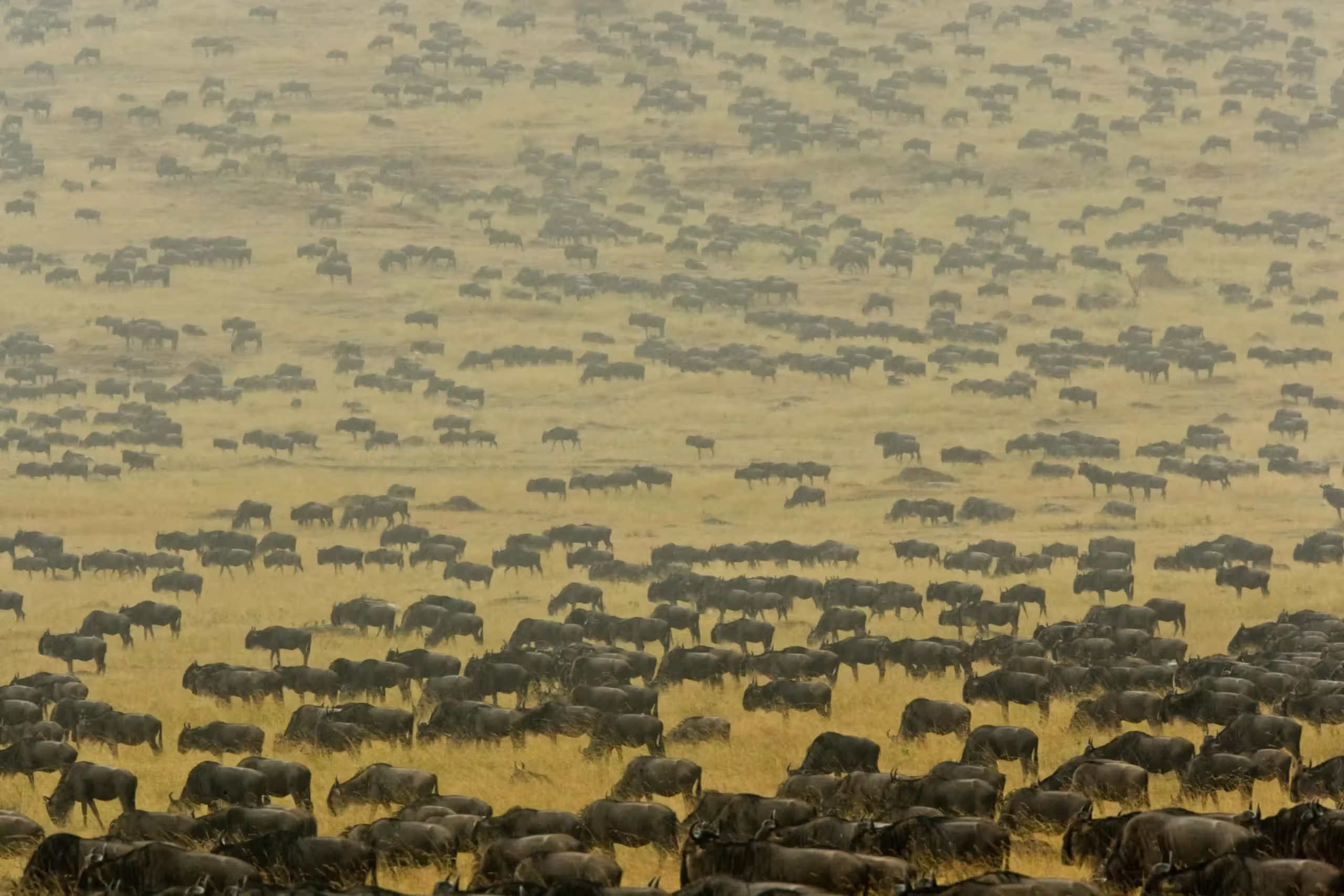
The Great Migration is without doubt the highlight of the Serengeti and is often referred to as the “greatest show on Earth” and one of the Seven Natural Wonders of Africa. In this spectacular yearly journey, nearly 1.7 million wildebeests, 500,000 zebras, and thousands of other herbivores relocate in a clockwise fashion around the Serengeti-Mara ecosystem in search of water and pasture. The southern Serengeti is the first region to experience the seasonal rains around December to March, and that is where the relocated herds and calving season ambush predators by joining the mother herd.

By April to June, the animals head north through the central and western regions, facing treacherous river crossings of the Grumeti and Mara Rivers in July to September—heart-pounding moments where crocodiles and lions lie in wait, creating nature’s ultimate survival drama. From October to November, the herds return south, completing the 1,200-kilometer circuit. Timing your visit to key phases ensures thrilling sightings, but the migration’s unpredictability adds to the excitement. Join a guided safari to track the herds, or opt for a hot air balloon ride for an aerial view of this mesmerizing phenomenon that highlights the interconnectedness of life in the wild.

FAQ about Serengeti National Park

How do I get to the Serengeti National Park?

The Great Migration is without doubt the highlight of the Serengeti and is often referred to as the “greatest show on Earth” and one of the Seven Natural Wonders of Africa. In this spectacular yearly journey, nearly 1.7 million wildebeests, 500,000 zebras, and thousands of other herbivores relocate in a clockwise fashion around the Serengeti-Mara ecosystem in search of water and pasture. The southern Serengeti is the first region to experience the seasonal rains around December to March, and that is where the relocated herds and calving season ambush predators by joining the mother herd.

Like with most international locations, travelers wishing to visit Tanzania need to hold a passport with at least six months’ validity and apply for a visa. Thankfully, a single-entry tourist visa can be easily obtained either online or at the entrance for a fee of $50. However, citizens of the US will need to pay $100 to obtain a multi-entry visa. There have been complaints that services at the airport are usually congested and thus it is advisable to pre-apply. Citizens of some East African countries are exempted but you still need to research the current eligibility as it fluctuates depending from where you are coming from.


The Serengeti is safe for tourists, with well-trained guides and lodges ensuring minimal risks from wildlife—rare incidents occur as animals are accustomed to vehicles. However, from a wider perspective, Tanzania as a whole, has issues, violent crime, such as robbery or assault, terrorism aimed at tourists, and, more worrying, a general propensity for violence. Follow marked paths, do not walk alone at night, and consider enrolling in the U.S. Smart Traveler Enrollment Program (STEP) for alerts. There are medical evacuation services and it is important to have travel insurance that covers emergencies. As of 2025, the U.S. is issuing a Level 2 warning, with increased risks in regions like Mtwara.


Pack practical Safari clothing for outdoor activities and ever-changing weather. Includes lightweight clothing in neutral shades, long sleeves, and a sun protection pants for evenings (to guard against sun and insect bites), a warm jacket or a sweater for cool Arabian nights, comfy, sturdy closed shoes, and a sun hat. Sun screen, insect repellent, binoculars, a camera with zoom lens and spare batteries, flashlight, and reusable water bottle are also essential. Bring small USD or Tanzanian shillings and avoid wearing bright clothes for blending in with the vibrant nature. While most lodges offer complimentary toiletries, it is mission critical to bring extras for remote camps.

Lodges range from luxury to budget-friendly options such as tented camps. Semi-tented bush camps are permanent and come with en-suite facilities, and ultra-luxurious properties feature gourmet dining and private plunge pools. Mobile tented camps follow the Great Migration which offers the best wildlife viewing. Stays are often all-inclusive, with meals provided, but drinks differ in coverage. Premium drinks are covered at some lodges, while others only offer non-alcoholic beverages. Some lodges are wheelchair-friendly. To secure your choice, schedule bookings during peak seasons 8 to 18 months in advance.


Prices depend on luxurious levels, group size, and duration but, expect US$450-1700 per person for 3 day tours ranging from mid-level to luxurious, and US$2500-7500 for weekly tours. They cover meals, transport, and accommodation but international flights are excluded. Park entry fees are an additional US$82.60 per adult per day (US$23.60 for children aged 5 to 15). Shared vehicle safari tours are more affordable while private tours balloon rides (US$500+) drive up costs. Don’t forget to include guide gratuities, US$30-50 and visa fees. These costs often provide packages that help save money.